Now playing Season 1, Episode 4 — On Realism
January 16, 2026
Season 1 • 8 episodes
In our introductory lecture, Dr. Bonevac explores the foundations of ethics through virtue theory, drawing on Confucius, Socrates, Plato, and Aristotle to examine what it means to live a good life and cultivate good character. We address three central questions—what kind of person to be, what to do, and how to decide—while discussing virtue as a mean between extremes, the unity of virtues, weakness of will, and the role of habit in developing virtue. The lecture concludes by considering how virtues may instead be complex combinations of simpler traits rather than strict means between extremes.
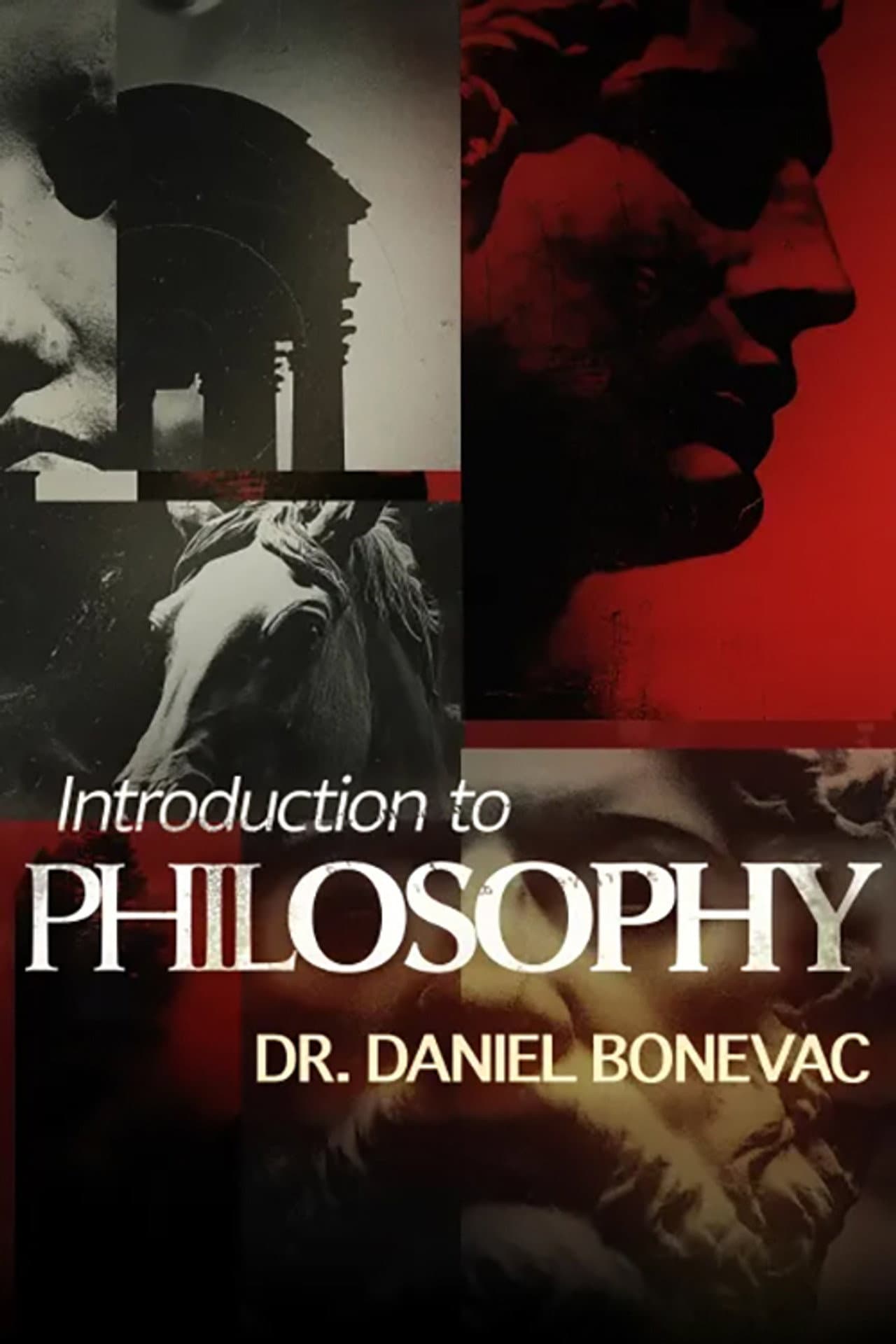
In Introduction to Philosophy, a nine-hour course, Dr. Bonevac guides us through the major traditions of Western philosophy in eight engaging lectures on ethics, metaphysics, and epistemology. We explore three key ethical frameworks—virtue ethics, deontology, and consequentialism—before tackling fundamental questions about reality, from realism to idealism. The course then examines theories of knowledge, weighing skepticism’s doubt, rationalism’s innate ideas, and empiricism’s reliance on experience. Finally, we consider how these philosophical traditions continue to shape debates about morality, reality, and human understanding today.
In lecture four, we learn about realism in Western philosophy through the contrasting views of Plato and Aristotle. We examine Plato’s theory of Forms, where abstract universals like justice or triangularity are the true realities and physical objects are mere shadows, and contrast this with Aristotle’s view that individual substances, like particular humans or horses, constitute reality. The lecture concludes with Aristotle’s analysis of substance, including essential and accidental properties, highlighting how these two approaches offer radically different ways of understanding reality.

Dr. Daniel Bonevac
Host
• Choose the season first, then switch episodes quickly.
• If a stream does not work, change the server.
• Use Next to binge smoothly without going back.
1
1
0.0
Dr. Daniel Bonevac
N/A
In lecture two, we turn to deontological ethics, which emphasizes moral principles and rules for action rather than character traits. We consider a range of approaches—from Abelard’s focus on intentions and Aquinas’s natural law grounded in human flourishing, to ethical intuitionism with its plural moral principles, and Haidt’s five-dimensional moral foundations theory. The lecture builds to Kant’s landmark categorical imperative, challenging us to act only on maxims we could will as universal laws and to treat humanity always as an end, never merely as a means.
Peterson Academy
N/A